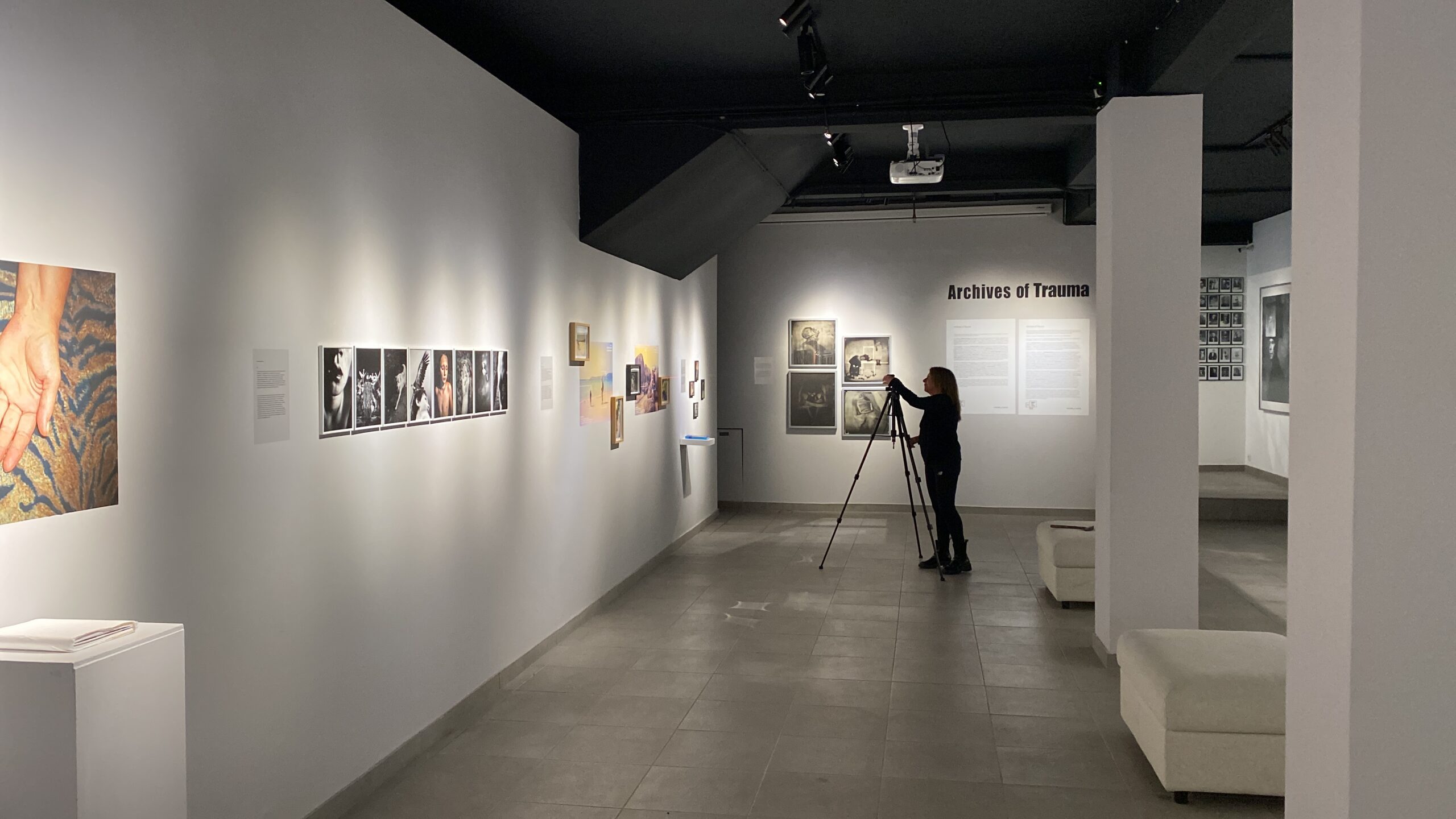
A photograph no longer needs to remain a framed object on a wall. It may become a projection across a building, an element within an installation or one moment in a moving sequence. Likewise, an architectural space may be designed around sound, performance or responsive light rather than around fixed physical form alone.
These crossovers can be exciting, but the vocabulary used to describe them is often imprecise. “Immersive” does not automatically mean meaningful, and “interactive” is not a substitute for an artistic idea. The important question is what each medium contributes that another could not.
An installation that asks viewers to move through it makes time and the body part of its composition. A projection can transform a familiar surface into a changing narrative. A photograph placed in a sequence can acquire meaning through the images before and after it. The format shapes the experience.
For curators and critics, interdisciplinary work demands equally flexible methods of evaluation. Technical novelty matters less than coherence: are the materials, technologies and spatial decisions in service of a clear intention? Does participation deepen the work or simply provide a moment of spectacle?
Creative disciplines do not need to lose their identities to collaborate. Their differences can be productive. A strong interdisciplinary project allows each practice to challenge the assumptions of the others.
The boundary between disciplines is often where a new language begins.
