About Hannah Grendel
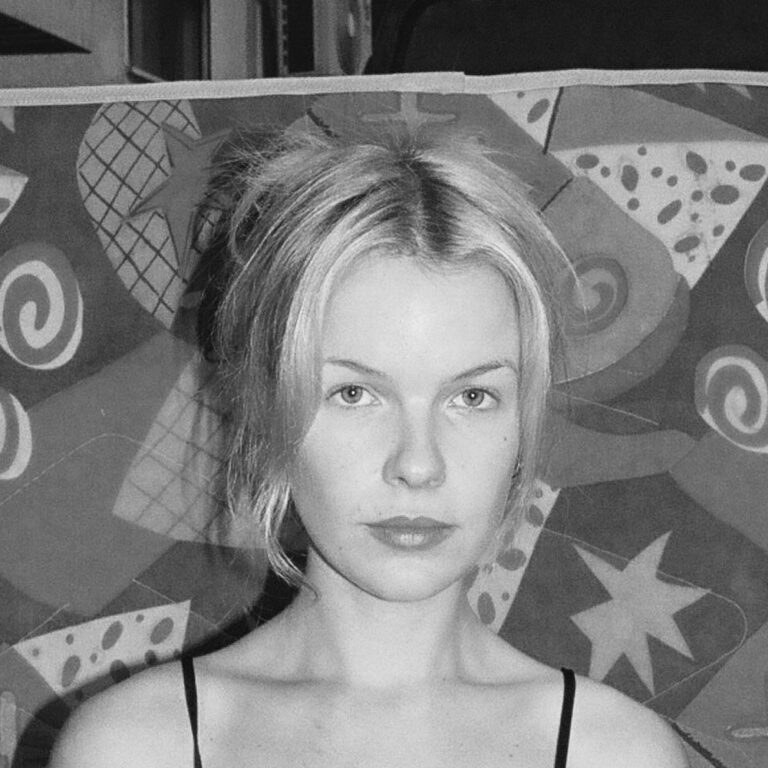
Hannah Grendel is a photographer based in Greece.
Photography is at the centre of Hannah’s personal practice. She studied photography at Hochschule Düsseldorf in Germany, and she works mostly on analog film, always in series rather than single images. Her practice extends to editing, sequencing and designing photobooks and zines. For her, the way photographs are arranged and placed in conversation with each other is as important as the images themselves.
Her work moves between the quiet and the deeply personal. On one side, she is drawn to the ordinary details most people overlook, such as a still life, an empty street or the corner of a room. On the other, she uses abstract body photography to make visible experiences that usually remain hidden.
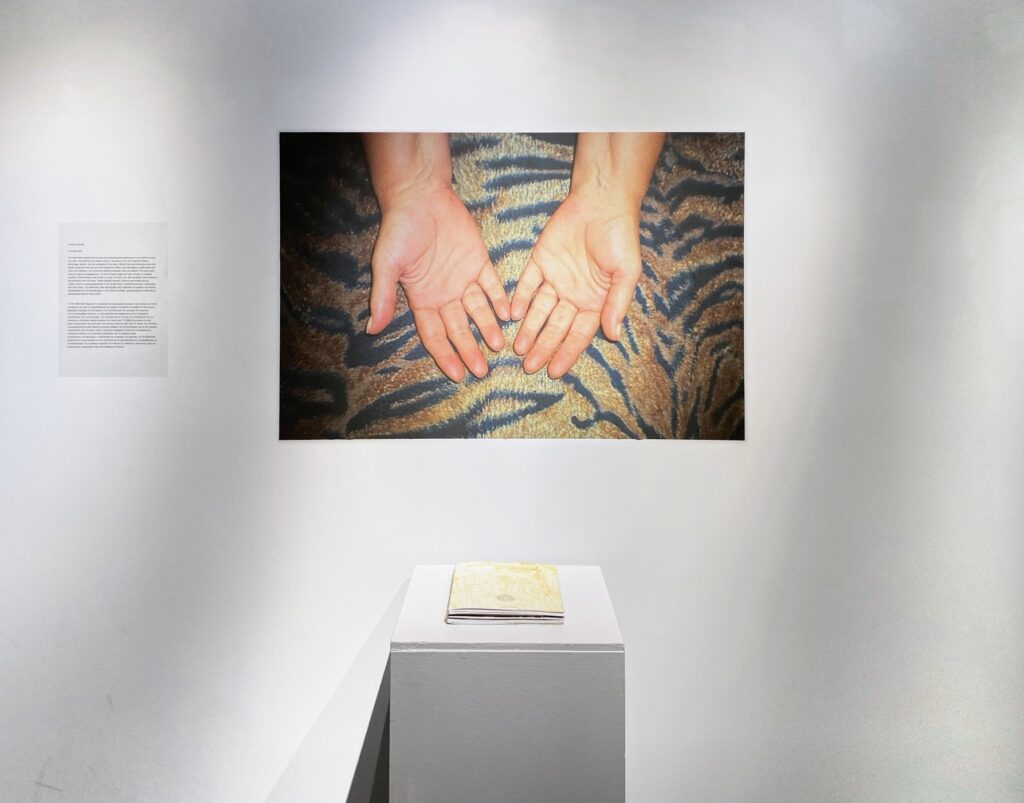
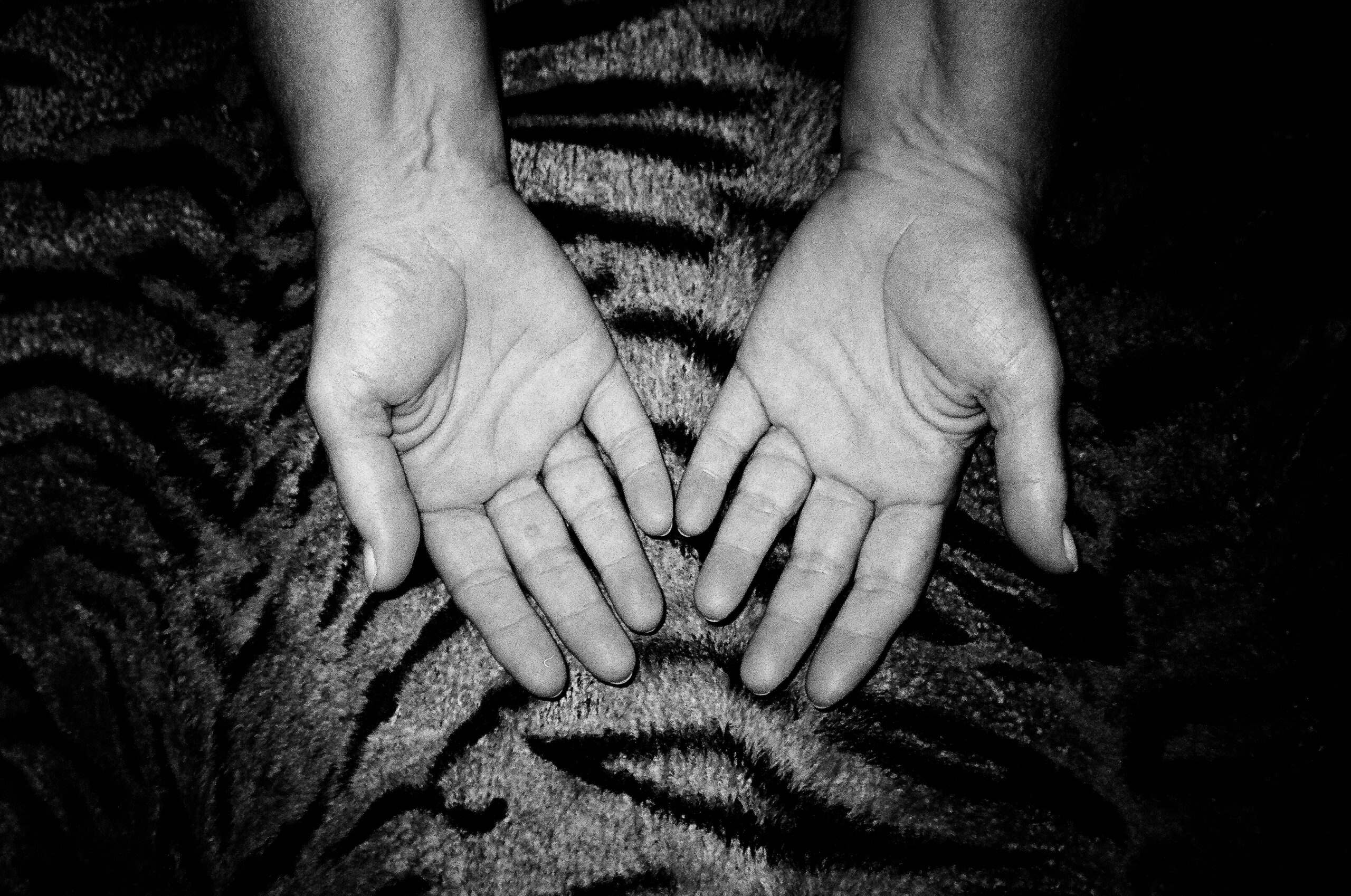
Her photobook The Aftermath is about the unseen side of breast cancer. Rather than the familiar images of illness, it explores the emotional pain women go through as their femininity changes, and what it means to be constantly observed and treated in clinical settings, turning from a person into an object. The series shows no faces, only hands, feet, a torso, the back of a head. In this way the viewer connects not with one individual but with the feeling itself, expressed through the body and its language.
Her work has been exhibited as part of The Archive of Trauma, a group exhibition on photography and memory, shown at the Women’s Photo Festival in Athens and the Ostuni Foto Festival in Italy.
What first drew you to photography, and what continues to keep you behind the camera?
My story is a fairly classic one. When I was young, my grandfather filmed everything with his VHS camera: my whole childhood, and my sister’s too. He was also the one who first put a camera in my hands, a small digital Canon. From then on I photographed constantly, though not with much skill or intention.
That changed when I studied communication design in Düsseldorf and chose photography as my major. Around then I bought my first analog camera and started shooting without any concept at all, just photographing whatever caught my eye. Over time I realised that what I loved wasn’t the moment itself so much as the act of capturing it. Even the most ordinary subjects, like a vase, a still life or an empty street, felt almost magical to me once they were in the frame.
That’s still what keeps me behind the camera. I’m drawn to the small things most people pass by without noticing, and photography is my way of giving them attention, and finding meaning in what nobody else is really looking at.
What do you hope people will see, feel, or question when they encounter your photographs?
I want people to see what usually stays unseen. Sometimes that’s a small, ordinary thing, like a vase or an empty street, the kind of detail we pass every day without noticing. Other times it’s something much heavier: a feeling, or a kind of pain that doesn’t show on the surface.
I often work in an abstract way, especially with the body. I leave out faces and focus on hands, feet, a back or a gesture, so the viewer doesn’t attach the image to one specific person. I want them to connect with the feeling itself, expressed through the body and its language, and maybe recognise something of their own in it.
So I hope people slow down, feel something they might not expect, and question how they look: at everyday things, at other people, and at what we choose not to see.
How has your way of seeing the world changed since you began photographing?
Photography taught me to pay attention. Before, I moved through the world like most people, focused on where I was going and not on what was around me. Once I started photographing, especially with my analog camera, I began to notice things I used to walk past: the light on an empty street, the way objects sit in a room, small details that seem meaningless until you really look at them.
Over time, that attention moved from objects to people. I became much more aware of body language, of how much a person expresses through their hands, their posture or the way they hold themselves, often more honestly than through their face or words. I also became more aware of what stays hidden: the feelings and experiences people carry that never show on the surface.
So I think photography made me slower, more observant, and more empathetic. I don’t take what I see at face value anymore. I’m always looking for what’s underneath.
How do you recognize a subject worth photographing?
Honestly, I don’t always recognise it right away, and I think that’s part of the process. When I started shooting on film, I photographed almost without a plan, just following what caught my eye. Often it’s something very small and ordinary: the way light falls on an object, an empty street, something standing slightly out of place. If something makes me pause for even a second, while everyone else walks past, that’s usually a sign.
But the real recognition often comes later. When I develop a film and see the images next to each other, I understand why I took them. Sometimes a photograph only becomes worth something in relation to another one, maybe one I took months before.
With more personal projects, it’s different. There the subject finds me. It’s usually something I’m living through or close to, something that affects me but stays invisible to others. Then the question isn’t whether it’s worth photographing, but how to show what can’t be seen directly.
Do you begin a project with a clear idea, or does the story reveal itself along the way?
Both, depending on the work. Most of the time, the story reveals itself along the way. I photograph without a fixed concept, following what holds my attention, and only when I develop the films and lay the images out together do I start to see what connects them. In that sense the story isn’t something I plan, but something I discover.
With more personal projects, it’s different. They usually begin with a clear intention, something I feel needs to be seen or said. But even then, that idea is only the starting point. How the images look, which ones belong together and how they’re sequenced only becomes clear through the process itself.
So I’d say I sometimes begin with a question, but never with the answer. The answer is what the work gives back to me.
How do you decide when a photograph is finished?
I never think in single images. I work in series and love making photo books, because layout adds so much to the story. After developing and scanning a film, I see my photographs for the first time, and they start to make sense next to each other, sometimes alongside a roll from a year ago. A photograph is finished when it starts speaking to another one.
What role does experimentation play in your work?
Experimentation is at the core of how I work, though maybe not in the most obvious way. I don’t experiment much with technical effects. I experiment with looking. I often photograph without a plan, just to see what happens when I point the camera at something no one else would notice. Shooting on film adds to that, because I never fully know what I’ve captured until later.
The place where I experiment most is layout. When I make photobooks and zines, I try out different sequences, pairings and formats, and see how the meaning of an image changes depending on what’s next to it, or how much space it’s given on a page. The same photograph can feel completely different in another context. For me, that’s where the real discoveries happen.
So experimentation isn’t a separate step in my process. It is the process. It’s how I find out what the work is about.
What can photography communicate that words cannot?
Photography can communicate what we don’t have words for, or what we’re not ready to say. Some experiences are too complex, too painful or too quiet to describe. When you try to put them into language, they become smaller or lose their weight. A photograph can hold them as they are.
For me, much of it comes down to the body. A hand, a posture, the curve of a back can express vulnerability, strength or exhaustion more honestly than any explanation. We understand these things instantly, often before we can even name what we feel.
Photography also leaves space. Words tend to tell you what to think, while an image lets you bring your own experience into it. Two people can look at the same photograph and feel completely different things, and both can be true. I think that openness is something words rarely allow.
What has failure taught you about photography?
With analog film, failure is part of everyday practice. A roll can be over- or underexposed, the light might not be what I thought, or an image I was sure about simply doesn’t work once I see it. In the beginning that was frustrating. Over time it taught me to let go of control and accept that not every photograph has to be perfect.
Failure also taught me that an image that “fails” on its own isn’t necessarily lost. Sometimes a blurry or imperfect photograph becomes important when it sits next to others in a series, because it carries a feeling the technically good images don’t. Some of my favourite photographs are ones I almost threw away.
Most of all, it taught me to keep going. Many rolls feel like nothing at first. But if you keep photographing, the work slowly shows you what it’s about.
What inspires you outside photography?
Outside photography, I’m very inspired by different forms of printing. I love how the same image can completely change depending on how it’s printed: the texture of the paper, the way ink sits on the surface, the colours, even the small imperfections. A print is never neutral. It adds its own character to the work.
That fascination is closely connected to my love for photobooks and zines. For me, a photograph isn’t finished on the screen. It becomes real when it’s printed and holdable, when it has weight, texture and a place in a sequence. Exploring different printing processes keeps reminding me that how we present an image is part of what it says.