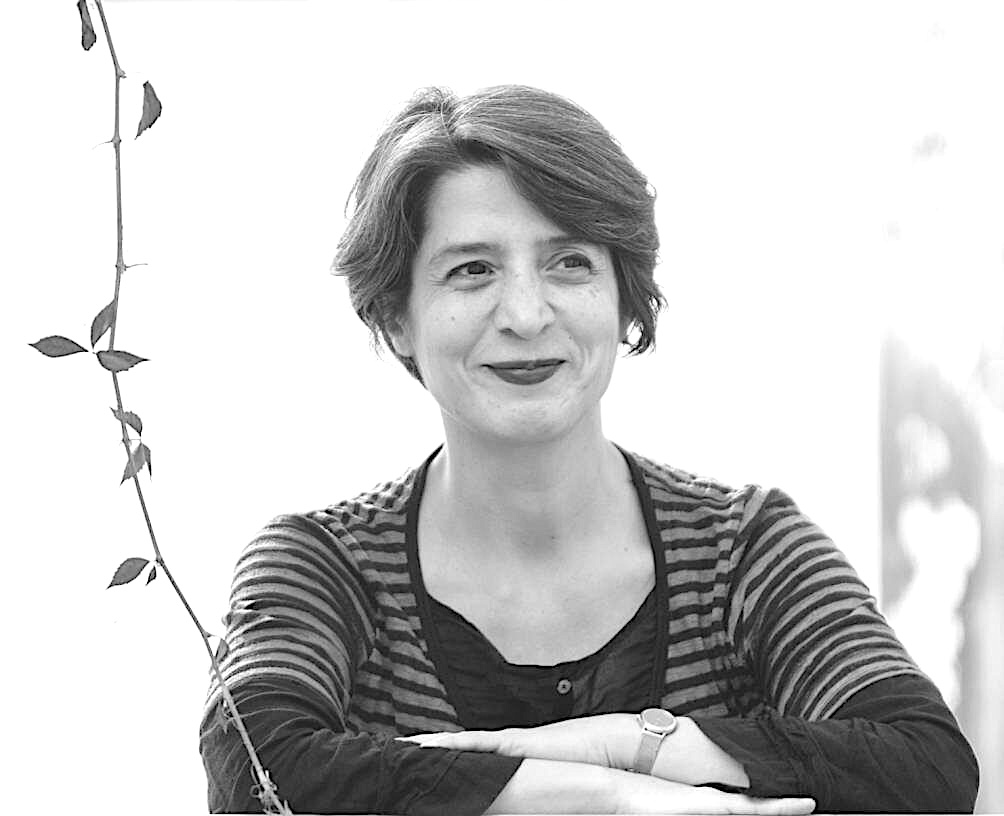
In the world of contemporary design, where innovation is often associated with technology and spectacle, Lily Latifi has built a distinctive creative language around something far more subtle: the relationship between material, light, and space.
For more than two decades, the Paris-based designer has explored the possibilities of textiles beyond their traditional decorative role. In her hands, fabric becomes architecture. A curtain becomes a movable wall. A sheet of felt becomes a sculptural surface. Light, passing through carefully considered patterns and textures, becomes an essential part of the design itself.
Her work occupies a fascinating territory between textile design, interior architecture, craftsmanship, and industrial innovation.
Beyond Decoration
Trained at Paris’s École Duperré, Latifi established her design practice in 1999, developing an approach that combines traditional textile knowledge with contemporary manufacturing techniques.
Rather than simply creating beautiful surfaces, she investigates how materials can influence the way people experience their surroundings.
Her designs often serve multiple purposes simultaneously. They divide spaces without closing them off, provide privacy without sacrificing light, and improve acoustic comfort while introducing texture and visual rhythm.
This balance between function and poetry has become one of the defining characteristics of her work.
In an age when interiors are increasingly expected to adapt to changing needs, Latifi’s approach feels particularly relevant. Her textile partitions and architectural surfaces offer alternatives to permanent walls, allowing spaces to remain flexible, open, and responsive to the people who inhabit them.
Designing With Light
Perhaps the most compelling aspect of Latifi’s work is her understanding of light as a material in its own right.
Through transparency, perforation, layering, and texture, her designs create a constantly evolving relationship between a surface and its surroundings.
As daylight changes, so does the character of the textile. Shadows shift, patterns emerge, and architectural boundaries become less rigid.
The result is an environment that feels alive rather than static.
There is also a sense of restraint in her work. Instead of demanding attention, her designs frequently reveal themselves gradually, through the interplay of light, shadow, movement, and perspective.
This sensitivity gives her creations an almost meditative quality, demonstrating that meaningful design does not always need to announce itself loudly.
Where Craft Meets Innovation
Latifi’s creative practice draws on both traditional craftsmanship and modern production technologies.
Techniques such as laser cutting allow her to explore intricate patterns and structures while preserving the tactile qualities that make textiles so appealing.
Felt, in particular, has become an important material in her work. Its softness, density, and acoustic properties offer possibilities that extend well beyond conventional upholstery or decoration.
Her NAMAD acoustic felt panel exemplifies this approach, bringing together visual expression and practical performance. The design received a Mixology Award in 2017, recognizing the potential of textiles to contribute meaningfully to contemporary architectural environments.
Yet technology remains a means rather than an end. What distinguishes Latifi’s work is not simply the technique employed, but the sensitivity with which it is applied.
An International Creative Language
Over the years, Latifi’s work has found its way into a wide range of environments, from corporate interiors and hospitality spaces to cultural institutions and diplomatic settings.
Her studio’s portfolio includes projects and collaborations associated with the French Ministry of Foreign Affairs, the Grand Palais in Paris, Renault, and other prominent international organizations.
These diverse settings demonstrate the versatility of her approach.
Whether working within a historic building or a contemporary commercial interior, her designs respond to architecture rather than compete with it.
They introduce softness into structured environments, create intimacy within large spaces, and offer subtle transitions between public and private experiences.
Underlying this versatility is a creative language that moves comfortably between different cultural and aesthetic traditions.
The Human Side of Design
At the heart of Latifi’s practice lies a simple but increasingly important idea: the materials surrounding us shape how we feel.
A room is not defined only by its dimensions or furnishings. It is also defined by the way sound travels through it, how daylight enters, how surfaces respond to movement, and whether its boundaries create a sense of openness or confinement.
Latifi’s work addresses these often-overlooked aspects of everyday experience.
Her textiles can soften an institutional environment, bring warmth to a minimalist interior, or transform a large, impersonal space into something more intimate.
In doing so, they remind us that design is not merely about the objects we see. It is about the atmosphere we inhabit.
A Different Kind of Innovation
As architecture and design continue to embrace sustainability, adaptability, and human-centered thinking, the boundaries between traditional disciplines are becoming increasingly fluid.
Lily Latifi’s career illustrates the creative possibilities that emerge when those boundaries are challenged.
Her work is neither simply textile design nor conventional interior decoration. It belongs to a broader conversation about how materials can redefine architecture and how thoughtful design can improve the quality of everyday life.
There is something particularly compelling about an approach that achieves so much through such seemingly modest means.
A piece of fabric. A pattern. A changing shadow.
In Latifi’s hands, these become instruments for transforming the experience of space.
And perhaps that is the most enduring quality of her work: the ability to make architecture feel lighter, more human, and more alive.
—
Luminaries Magazine celebrates creative individuals whose ideas and work expand the possibilities of photography, design, architecture, and the arts.
